Adopted a Dog in Colorado Springs? A 30-Day Training Plan
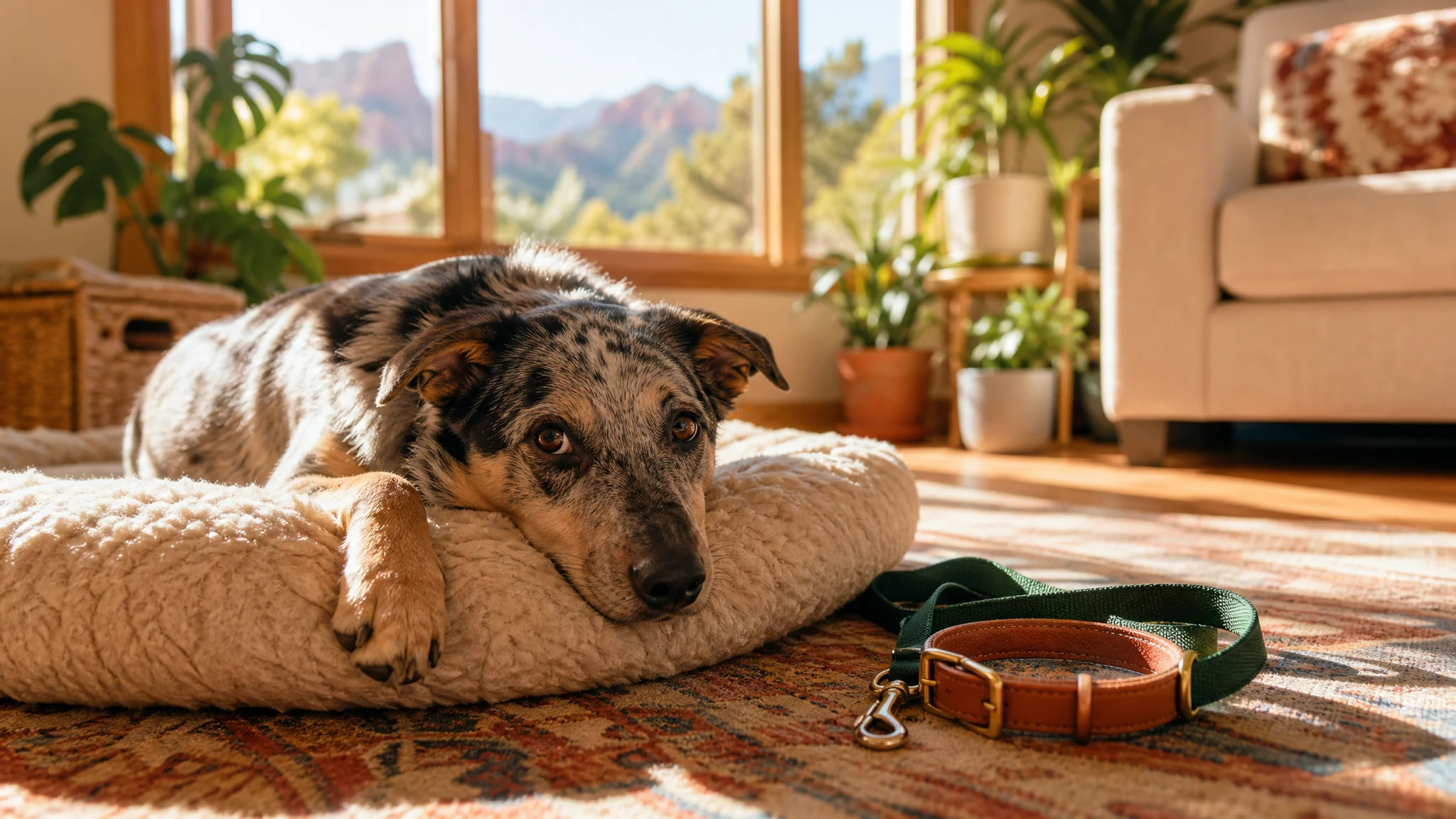
General training information. For aggression, sudden behavior changes or health concerns, see your veterinarian first.
You signed the papers, buckled the seat belt, and drove home with a new family member. Now comes the part nobody can fully prepare you for: the first month. This plan breaks the first 30 days into four weeks, so you always know what to focus on next.
It works for training a rescue dog of any age, and it is built around life in Colorado Springs: city rules, local parks, and our dry, high-altitude weather. Go at your dog's pace. Some dogs settle in days, others take months.
Where Colorado Springs adopters often start
Many local adopters begin with the Humane Society of the Pikes Peak Region (HSPPR). HSPPR describes itself as a local, independent nonprofit. Its Animal Law Enforcement division also serves El Paso County and other nearby areas, according to the HSPPR website.
Wherever your dog came from, ask the adoption staff or rescue group what they know about the dog's history, medical needs, and any behavior notes. That information will shape how you use this plan. If a detail is unknown, that is normal. Treat your dog as a fresh start and watch what you see.
Materials you will need
- A flat buckle collar or a front-clip harness, plus a standard 6-foot leash
- An ID tag with your phone number, and a microchip registration you have checked is current
- A crate or a gated, quiet resting area
- A comfortable bed and fresh water, available at all times
- Soft, small, high-value treats, pea-sized so you can give many
- Chew items and food puzzle toys
- Enzymatic cleaner for accidents
- A treat pouch or small container you can keep in your pocket
- Your adoption paperwork and rabies certificate
Skip tools that cause pain or fear. The American Veterinary Society of Animal Behavior (AVSAB) supports reward-based training, and that is the approach used throughout this plan. That means no shock, prong, or choke collars, and no physical corrections.
Before day one: the Colorado Springs paperwork
A few local rules are worth sorting out in the first weeks.
- Licensing. HSPPR says a license is required for all dogs and cats over 4 months old in the City of Colorado Springs, and HSPPR issues it. Its published fees are $20 for one year or $40 for three years for a spayed or neutered dog, and $35 or $75 for an intact dog. Seniors 65 and older pay less. A $20 late fee applies 30 days after expiration. Check the HSPPR licensing page for current details.
- Rabies. HSPPR says rabies vaccination is required for dogs and cats under Colorado law, and a rabies certificate is needed to license a dog. Keep your paperwork handy.
- Leash rules. HSPPR says dogs must be on a leash at all times except in designated off-leash dog parks.
- Barking. HSPPR says unprovoked, persistent barking that disturbs the peace is unlawful. This matters when you reach the alone-time week.
- Household limit. HSPPR's Laws and Ordinances page cites City code 6.7.106(F), which allows up to 4 adult dogs per household. Confirm any questions with HSPPR.
The 30-day plan, step by step
Step 1: Week 1, decompression (days 1 to 7)
Trainers often talk about the idea of "3 days, 3 weeks, 3 months" for how a rescue dog adjusts. It is a loose rule of thumb, not a schedule. The real lesson is that the first week should be quiet.
Your dog has been through a lot of change. Your goal this week is calm, not obedience.
- Keep the world small. Let your dog explore one or two rooms at first. Use baby gates to limit access.
- Hold off on visitors. Skip the welcome party. Friends, neighbors, and other dogs can wait.
- Set up a retreat. Put a bed or open crate in a quiet corner. Never force your dog into it. Toss treats in so it becomes a good place.
- Keep walks short and boring. Stay on your own street or a quiet block. Skip crowded trails and dog parks for now.
- Let your dog come to you. Sit nearby, speak softly, and toss treats. Do not hover, hug, or loom over a nervous dog.
- Start the routine. Feed, walk, and rest at roughly the same times each day.
Watch for body language: tucked tail, flattened ears, lip licking, yawning, or avoiding you. These are signs your dog needs more space.
Step 2: Week 2, routine and house training (days 8 to 14)
Dogs feel safer when life is predictable. This week, you build the daily rhythm and start house training in earnest, even if your dog is an adult. Assume nothing about what your dog already knows.
- Take your dog out often. Go out first thing in the morning, after meals, after naps, after play, and before bed. Every one to two hours is a reasonable start.
- Use the same spot. Walk to one area of the yard or a nearby patch of grass. Stand still and let your dog sniff.
- Reward right away. The moment your dog finishes, say "yes" and give a treat. Reward outside, not after coming back indoors.
- Supervise indoors. Keep your dog in sight, or use a gate, leash, or crate when you cannot watch. Most accidents happen when a dog is unsupervised.
- Clean accidents quietly. Use an enzymatic cleaner and do not scold. A dog who is punished may learn to hide, not to go outside.
Add one more piece this week: simple handling practice. Touch a paw, then treat. Touch an ear, then treat. This helps with future vet visits and grooming.
If your dog has frequent accidents, strains, or seems suddenly unwell, call your veterinarian. Medical issues can look like training problems.
Step 3: Week 3, name, attention, and recall (days 15 to 21)
By now your dog usually knows the household rhythm. It is a good time to build the basics that make everyday life easier.
- Teach name response. Say your dog's name once in a cheerful voice. When your dog looks at you, say "yes" and give a treat. Practice in a quiet room, ten repetitions at a time.
- Add "come." Start in the hallway. Say "come" in a happy voice, back up a few steps, and reward when your dog reaches you. Make it the best thing that happens all day.
- Build distance slowly. Move to a larger room, then a fenced yard, then a long line outdoors. Raise difficulty only when your dog succeeds easily.
- Teach "sit" and "look." Use a treat to lure the position, then reward. Keep sessions to three to five minutes.
- Practice loose-leash walking. Stop when the leash goes tight, and move forward when it relaxes. Reward your dog for staying near you.
Never call your dog to you for something unpleasant, like a nail trim or a scolding. That quickly teaches your dog that coming means trouble.
Keep your dog on a leash or long line in public. Colorado Parks and Wildlife, quoted by KRDO in May 2025, says prairie rattlesnakes live at elevations up to 9,500 feet and are more common at 7,500 feet and below, and advises keeping dogs on a leash. That article covers the whole state, so ask local land managers about current conditions on any trail you plan to use.
Step 4: Week 4, alone time and first outings (days 22 to 30)
Many rescue dogs find being alone stressful. Teaching it in small steps helps build confidence. Rushing it can lead to barking, chewing, or panic.
- Start with seconds. Give your dog a chew in the crate or resting area, step out of sight for a few seconds, then return calmly.
- Increase gradually. Move to a minute, then five, then fifteen. Mix up the lengths so it is not predictable.
- Keep departures low-key. No long goodbyes and no excited greetings. Wait until your dog is calm before saying hello.
- Exercise first. A walk and a short sniffing session before you leave can help your dog settle.
- Watch for stress. Drooling, constant pacing, or non-stop barking mean you moved too fast. Go back a step.
This week is also a good time for your first outings beyond the neighborhood, if your dog seems relaxed. Choose quiet times and keep visits short.
A note on Colorado Springs dog parks
The City of Colorado Springs lists several off-leash areas on its dog parks page. They include fenced parks at Palmer Park, Cheyenne Meadows Park, and Rampart Park, as well as the downtown Antlers Dog Park, which has separate areas for small and larger dogs. There are also unfenced dog runs at Garden of the Gods Park, Red Rock Canyon Open Space, and Yucca Flats in Palmer Park.
The city's rules for fenced enclosures say dogs must be accompanied by someone at least 16 years old, stay on leash until inside the enclosure, and be properly inoculated and licensed. No more than three dogs are allowed per person, and prong and spike collars must be removed before entering. Dogs with an aggressive history must wear a muzzle.
Many rescue dogs do better meeting one calm, known dog at a time than entering a busy park. You do not have to rush this. For hours and current conditions, check with the city's parks department.
Tips for a smoother first month
- Keep sessions short. Several two-minute sessions beat one long one.
- Use your dog's meals. Hand-feed part of the daily food as training rewards.
- Offer mental work. Sniff walks, puzzle toys, and scatter feeding tire a dog out in a healthy way.
- Plan for altitude and sun. Colorado State University veterinarians warn that heat stroke can be deadly. They advise giving water and moving a pet to shade or a cool building or vehicle, and not cooling a pet with a hose or by dipping it in water. Walk in the cooler parts of the day, and never leave a dog in a parked car.
- Be consistent as a household. Everyone should use the same cue words and rules.
- Keep a simple log. Note accidents, fears, and wins. Patterns show up quickly.
Common mistakes to avoid
- Doing too much, too soon. Dog parks, visitors, and busy trails in week one can overwhelm a dog.
- Punishing fear or accidents. Punishment can make a nervous dog more anxious and may damage trust.
- Using pain-based tools. Prong, choke, and shock collars carry real risks and are not part of humane training.
- Letting a dog off leash too early. A new dog does not yet know you or the neighborhood. Recall needs months to become reliable.
- Skipping the vet visit. Schedule a checkup in the first couple of weeks.
- Expecting the "real" dog on day one. Personality often emerges slowly as your dog relaxes.
What you can reasonably expect
By day 30, many adopters notice their dog seems calmer, follows a routine, and responds to its name more often. House training may be going better, and short stretches alone may feel easier. Results vary a lot, though. A dog with a long or difficult history may need more time, and some behaviors may take months to improve.
Setbacks are normal. If your dog regresses after a stressful event, go back to an easier step and rebuild from there.
When to get extra help
If your dog has a sudden change in behavior, appetite, or bathroom habits, see your veterinarian first. Pain and illness often cause behavior changes.
If your dog growls, snaps, or bites people, do not wait. Contact your veterinarian and a certified behavior professional. HSPPR Animal Law Enforcement takes reports of dangerous or aggressive animals. Colorado's dangerous dog statute, C.R.S. 18-9-204.5, also defines when a dog is considered dangerous, so it is worth understanding your responsibilities as an owner.
For ongoing training support, the CCPDT certified dog trainer directory lists trainers in Colorado Springs. It includes Carol Rebecca Abrams (CPDT-KA, CBCC-KA) and Miguel A. Gonzalez (CPDT-KA, listed with HSPPR). House of Dog Training lists Pamela Meyerhofer (PDT, PDT-Geek, CPDT-KA), owner Astrid Tryon (CPDT-KSA), and Angie Neal (CDBC) on its trainers page. Check each trainer's credentials and methods yourself, and ask whether they use reward-based training before you book.
To compare options, see our guide to dog training classes and costs in Colorado Springs. For one example of published pricing, House of Dog Training lists its Puppy K group class (8 weeks to 5 months, one hour weekly for 8 weeks) at $250 on its prices page. Check that page for current rates, and ask any trainer what ages and vaccine requirements apply to their classes.
After day 30
Day 30 is a checkpoint, not a finish line. Keep your routine, keep rewarding the behavior you like, and add new challenges slowly. Your dog is still learning that this home is permanent, and that trust grows with every calm, predictable day.
Sources
- Humane Society of the Pikes Peak Region, About Us
- HSPPR, License Your Pet
- HSPPR, FAQs
- HSPPR, Laws & Ordinances
- City of Colorado Springs, Dog Parks
- City of Colorado Springs, Antlers Dog Park
- C.R.S. 18-9-204.5, dangerous dogs
- Colorado State University, summer pet care tips
- KRDO, Colorado Parks and Wildlife rattlesnake warning
- House of Dog Training, Trainers
- House of Dog Training, Prices
- CCPDT directory, Carol Rebecca Abrams
- CCPDT directory, Miguel A. Gonzalez