Training Your Dog for Colorado Springs's Weather and Terrain
General training information. For aggression, sudden behavior changes or health concerns, see your veterinarian first.
Colorado Springs gives dogs a lot to enjoy: open space, red rock trails and fenced parks. It also asks owners to think ahead. Summer heat, warm ground and trailside wildlife are all part of life here.
This guide walks you through a simple, reward-based plan. It builds the skills that make colorado springs dog safety easier: a cooling routine, calm paw handling, a reliable "leave it" and a strong recall. Everything here uses treats, praise and patience.
What you will need
- A standard flat collar or a front-clip harness, plus a leash. Choose gear that does not rely on pain or pressure.
- Small, soft treats your dog loves, in a pouch you can reach quickly.
- A long line (a lightweight leash, often 15 to 30 feet) for practicing recall in open areas where leashes are required.
- A collapsible water bowl and plenty of drinking water for every outing.
- A towel and a clean, shallow bowl for your cooldown routine at home.
- Dog booties, only if you and your veterinarian decide they suit your dog. Introduce them slowly using the steps below.
- Your dog's license and rabies paperwork, kept current.
The hazards we are training for
Not every hazard has local documentation, so this guide sticks to the ones with a clear source. Two are covered here: heat stroke and rattlesnakes.
Heat stroke
Colorado State University veterinarians warn that heat stroke can be deadly. Their guidance is to give the pet water and move it to shade or a cool building or vehicle. They advise against cooling a pet by dipping it in water or using a hose. That guidance is general for Colorado, not specific to Colorado Springs, so ask your own veterinarian how it applies to your dog's age, coat, breed and health.
Rattlesnakes
A Colorado Parks and Wildlife spokesperson, quoted in a May 2025 KRDO report, said prairie rattlesnakes live at elevations up to 9,500 feet. They are more common at 7,500 feet and below. The report advises keeping dogs on a leash. It covers the whole state and does not name Colorado Springs, so check with Colorado Parks and Wildlife about the trail you plan to visit.
Other seasonal risks
Winter ice melt, plant seeds in fur and similar concerns may matter on your routes too. We have no Colorado Springs source to cite for them here. Your veterinarian is the right person to ask.
Step-by-step training plan
Step 1: Make water and shade a normal part of every outing
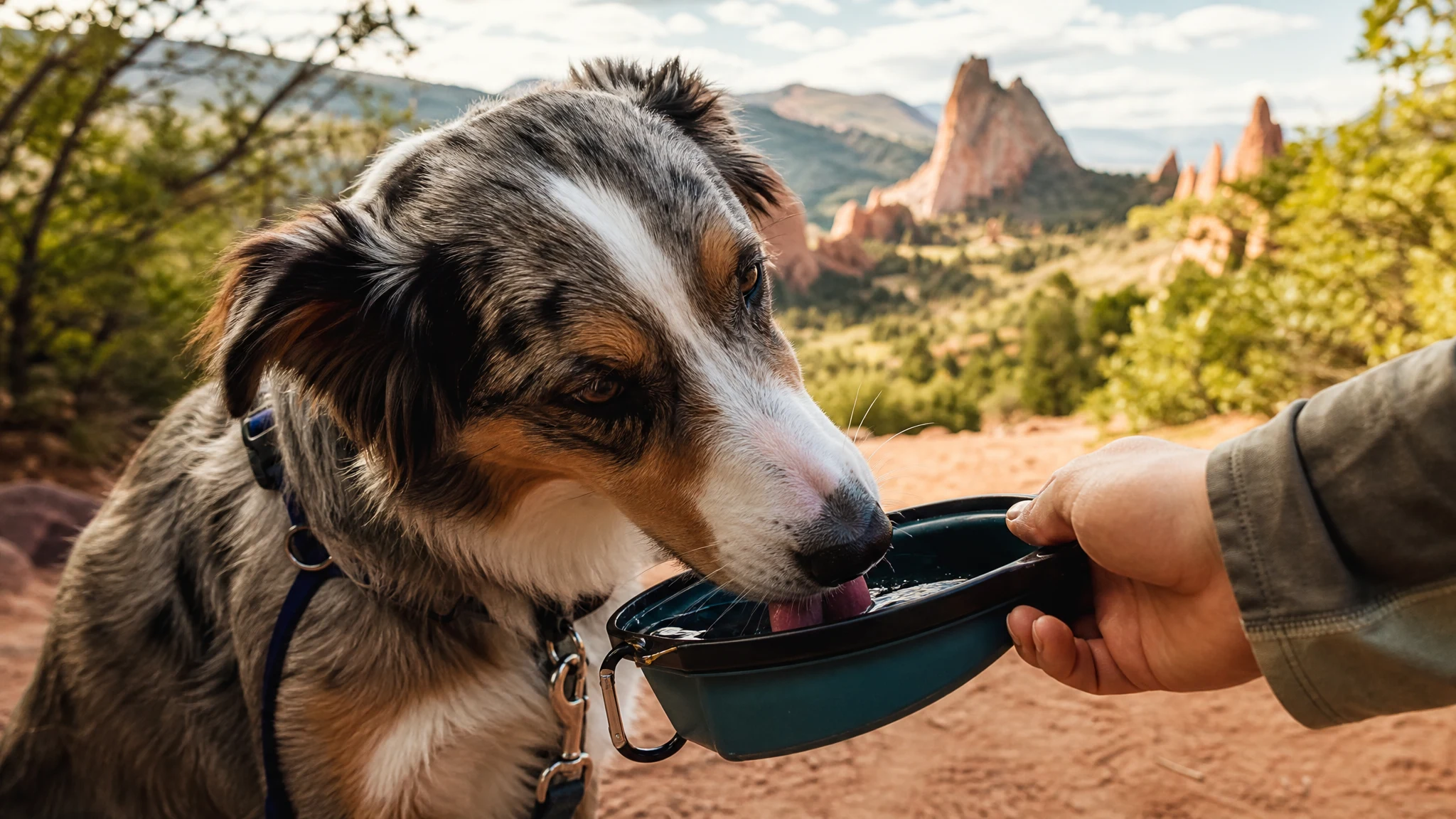
Dogs do better when a cooling routine is automatic. Before you head out, pack water. At your first stop, offer a drink and ask for a simple "sit" or "settle" in the shade. Reward it.
Why it helps: a dog who happily rests in the shade on cue is easier to manage when you need a break. You are teaching "pause and cool off" as a pleasant habit, not a punishment.
Step 2: Practice a calm cooldown routine at home
Heat stroke can be deadly, and CSU veterinarians say not to dip a pet in water or use a hose. So the goal of this step is not a soaking. It is a settled dog who accepts being moved to a cool spot and offered water.
- Pick a cool room or shaded corner of your yard.
- Say a cue such as "cool spot" and walk your dog there on a loose leash.
- Offer a bowl of water and a treat for lying down.
- Repeat a few times a week, in short sessions of a minute or two.
If your dog ever seems overheated, stop the outing and call a veterinarian right away. Do not wait to see whether it passes.
Step 3: Build habits for walking dog in heat
Walking dog in heat takes planning. Choose the cooler parts of the day, keep outings shorter and pick routes with shade. Watch your dog's body language. If your dog slows down, lags behind, pants hard or seeks shade, treat that as a signal to end the walk.
Train a "let's go home" cue. Say it in a cheerful voice, turn around and reward your dog for coming along. If you only use it when you are finished with a fun walk, dogs learn to resist it. Practice it often on easy days so it stays a happy sound.
Step 4: Teach paw handling and surface awareness
Hot pavement dogs may avoid is a real concern on sunny days, but we have no Colorado Springs source for surface temperatures, so we will not quote numbers. A simple rule of thumb is to place the back of your hand on the surface. If you cannot comfortably hold it there, it is too warm for bare paws. Your veterinarian can give you better guidance.
Now teach paw handling so you can check feet quickly:
- Touch one shoulder, then reward.
- Slide your hand down the leg and reward.
- Lightly hold a paw for one second, then reward and release.
- Gradually build to gently spreading the toes and looking at the pads.
Go slowly. If your dog pulls away, go back to the previous step. A dog who is comfortable with foot checks is easier to examine after any walk.
Step 5: Introduce booties gradually, if you choose to use them
Some owners use booties on warm ground or in other conditions. They are optional, and many dogs need time to accept them.
- Let your dog sniff a bootie and give a treat.
- Touch the bootie to a paw, then treat.
- Put one on for a few seconds, treat, and remove it.
- Slowly add more booties and more time, always paired with treats.
- Practice walking indoors before trying them outside.
If your dog seems stressed or the booties cause rubbing, stop and ask your veterinarian about alternatives.
Step 6: Teach a rock-solid "leave it"
Rattlesnakes are the reason this skill matters on trails. A dog who ignores a strange object, animal or smell near the path is safer.
- Hold a treat in a closed fist. Let your dog sniff and nibble at it.
- The moment your dog backs off, say "yes" and reward from your other hand.
- Next, place a treat on the floor under your hand. Reward for looking away.
- Gradually uncover the treat while your dog stays focused on you.
- Practice with more interesting items, then on walks, always rewarding generously.
Keep practicing for weeks. Reliability takes repetition in lots of places.
Step 7: Build a strong recall on a long line
A dog who turns toward you when called gives you more options on a trail. Use a long line, not an open field, while you build the skill.
- Pick a special recall word and a high-value treat reserved for it.
- In a quiet space, say the word once, then reward your dog for arriving.
- Add distance on the long line, then add mild distractions.
- Never call your dog to scold them. Coming to you must always feel good.
The KRDO report advises keeping dogs on a leash in rattlesnake country. Recall is a backup skill, not a replacement for a leash on trails.
Step 8: Practice leash manners where leashes are required
The Humane Society of the Pikes Peak Region (HSPPR), which runs Animal Law Enforcement for the area, says dogs must be on a leash at all times except in designated off-leash dog parks. The city page on dog parks also says City Code requires dogs on a leash in city parks and on city trails except in designated areas. HSPPR does not state a maximum leash length on the page we reviewed, so check with them.
Practice a loose-leash walk by rewarding your dog for staying near your side and stopping when the leash tightens. A calm walker is easier to cool down, easier to protect from hazards and easier to call back.
Where to practice in Colorado Springs
The City of Colorado Springs lists several designated areas for dogs. Unfenced dog runs include the Garden of the Gods Park dog run, the Red Rock Canyon Open Space dog loop and the Palmer Park dog run at Yucca Flats. Fenced dog parks include the Palmer Park fenced dog park, Cheyenne Meadows Park, Rampart Park and Antlers Dog Park downtown. The city's page did not publish hours for most of them, so check before you go.
For the fenced parks at Palmer Park, Cheyenne Meadows and Rampart, the city lists these enclosure rules:
- Dogs must be with a person at least 16 years old.
- Dogs stay on leash until inside the enclosure.
- No more than three dogs per person.
- Dogs with an aggressive history must wear a muzzle.
- Dogs must be properly inoculated, licensed and not in breeding condition.
- Pinch (prong) and spike collars must be removed before entering.
Antlers Dog Park has separate fenced areas for small and larger dogs. Its city page does not list rules, so check with the city.
Tips and common mistakes
- Training only once. Skills fade without practice. Short, regular sessions work better than one long one.
- Using the recall word when you are annoyed. Keep it positive every time.
- Skipping the leash on trails. Leash rules apply in city parks and on city trails outside designated areas, and the rattlesnake advice also calls for leashes.
- Hosing down a hot dog. CSU veterinarians advise against dipping or hosing. Give water, move to shade or a cool space and call your veterinarian.
- Rushing booties. Forcing them on can make dogs dislike them. Go in tiny steps.
- Forgetting paperwork. HSPPR says a license is required for dogs over 4 months old, and a rabies certificate is needed to license a dog. Check the HSPPR licensing page for current fees.
Expected results
With steady practice, many dogs become calmer about foot checks, settle in the shade more readily and respond better to "leave it" and recall cues. Progress varies with age, history and distractions, so go at your dog's pace. These skills can lower risk but cannot remove it. Keep using shade, water and a leash.
When to get help
If your dog shows signs of heat stroke, or is bitten by a snake, contact a veterinarian immediately. If your dog is aggressive toward people, see a veterinarian first to rule out pain or illness, then work with a certified behavior professional.
For group classes, private sessions and what training can cost locally, see our guide to dog training classes and costs in Colorado Springs.
Sources
- Colorado State University media relations: veterinarian pet care tips for summer
- KRDO: Colorado wildlife officials warn rattlesnake season is upon us
- Humane Society of the Pikes Peak Region: FAQs
- Humane Society of the Pikes Peak Region: License Your Pet
- City of Colorado Springs: Dog Parks
- City of Colorado Springs: Antlers Dog Park